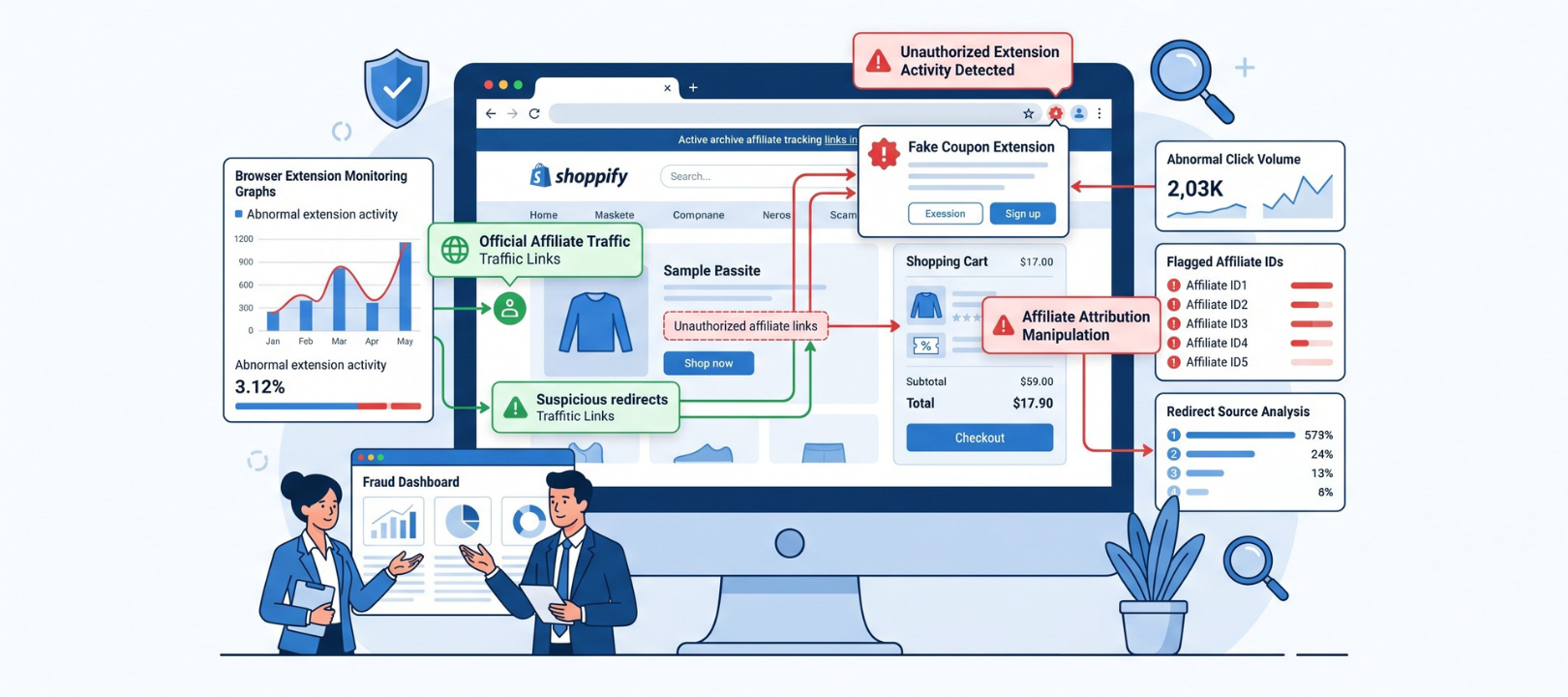
Have you noticed unusual affiliate conversions or unexpected commission losses in your campaigns? Browser extension abuse could be the hidden cause behind it. Malicious browser extensions (like coupon finders, ad blockers, or VPNs) secretly overwrite affiliate links, inject illicit tracking codes, and manipulate data attribution without asking for user consent. As extension-based affiliate fraud continues to grow every year, advertisers must closely monitor suspicious traffic patterns, attribution changes, and click activity to detect the fraudulent activities and behavior early to protect the overall affiliate campaign performance.
What is Browser Extension Abuse?
Browser extension abuse refers to the misuse of browser add-ons or plugins to manipulate affiliate tracking for fraudulent commissions.
Here are the common signs of browser extension abuse:
- Unauthorized affiliate redirects
- Sudden increases in affiliate conversions
- Hidden cookie placement
- Unusual checkout behaviour
- Suspicious branded search traffic
Strengthen your affiliate protection with PPCTrace to detect browser extension abuse, ensure accurate attribution, and maintain secure, trustworthy campaign performance.
How Browser Extensions Steal Affiliate Commissions
Browser extensions can steal affiliate commissions by silently modifying tracking data, altering links, and influencing user actions in the background. This leads to incorrect attribution and revenue loss for legitimate affiliates.
Here are the best ways to understand how browser extensions cause affiliate fraud:
|
Type of Browser Extension Abuse |
Impact on Affiliate Tracking |
|
Unauthorized data collection |
Privacy risk and hidden user profiling |
|
Ad injection & affiliate hijacking |
Stolen commissions and incorrect attribution |
|
Click fraud & traffic manipulation |
Inflated metrics and revenue loss |
|
Browser hijacking |
Loss of genuine traffic and distorted journeys |
|
Hidden functionality |
Undetected tracking abuse |
|
Over-permission abuse |
Enables large-scale tracking and link manipulation |
Common Types of Browser Extension Fraud in Affiliate Marketing
Here are the Common Types of Browser Extension Fraud in Affiliate Marketing:
Extension Affiliate Fraud
Extension affiliate fraud often disguises itself as shopping helpers or productivity tools. These extensions manipulate tracking systems while appearing harmless to users.
Fake Cashback and Reward Extensions
Fake cashback extensions promise rewards but secretly hijack affiliate attribution to earn commissions from existing customer traffic. However, not all cashback extensions are fake or fraudulent.
Ad Injection and Traffic Hijacking
Some malicious extensions generally inject unauthorized advertisements and affiliate links directly into webpages, overwriting affiliate attribution or redirecting traffic before conversion.
Malicious Shopping and Coupon Extensions
Coupon extensions may automatically insert affiliate tracking codes, cookie stuffing, forced clicks, or last-click attribution manipulation during checkout, even when users never interacted with the affiliate.
Browser Extension Malware and Hidden Tracking Scripts
Certain malicious or deceptive browser extensions monitor browsing behaviour and silently manipulate referral data using hidden scripts.
In short, these fraud methods manipulate attribution tracking and user browsing journey, turning genuine traffic into stolen or misattributed affiliate revenue.
Worried about lost affiliate revenue from extension abuse? Use PPC Trace to detect tracking manipulation and protect your performance data.
Warning Signs of Browser Extension Abuse
Detecting browser extension abuse early can prevent significant financial losses and protect affiliate program integrity. Several unusual behaviours may indicate extension-based affiliate fraud.
Advertisers should monitor affiliates generating abnormally high conversions, especially when click-to-conversion times are extremely short. Suspicious redirects before checkout and duplicate attribution claims are also strong warning signs.
Key Warning Indicators:
- Sudden spikes in affiliate sales
- Extremely fast conversions
- Unusual referral patterns
- Duplicate transaction attribution
- High branded keyword traffic
Consistent monitoring of traffic quality and referral logs can easily help identify illegal affiliate activity detection before it becomes a major issue for brands and advertisers.
Risks of Browser Extension Abuse for Advertisers and Affiliate Programs
Browser extension abuse in affiliate marketing affects both advertisers and genuine affiliates. Fraudulent browser extension commission theft payouts reduce marketing efficiency and create inaccurate performance reporting.
When browser extensions manipulate attribution systems, advertisers lose visibility into which affiliates are actually driving valuable conversions. This weakens campaign optimization and damages trust within affiliate partnerships.
How to Detect Extension Affiliate Fraud
Detecting extension affiliate fraud requires continuous monitoring and strong fraud detection systems. Affiliate managers should regularly analyze attribution reports and referral data to identify unusual activity. If you are stuck in this loop, book a demo at PPC Trace which helps you with:
- Monitoring affiliate attribution reports
- Analyze redirect and referral logs
- Audit browser extension permissions
- Review click-to-conversion timing
- Use affiliate fraud detection sources
- Track traffic quality metrics
Using advanced affiliate fraud monitoring solutions can help advertisers identify browser extension abuse before it impacts the complete campaign performance.
Best Practices to Prevent Extension-Based Affiliate Fraud
To prevent browser extension-based fraud, affiliate detection starts with taking effective steps in the affiliate marketing system. Brands should clearly check out the important affiliate policies and strictly prohibit the use of unauthorized browser extension activities in affiliate management.
PPCTrace Regular audits and real-time fraud monitoring detection systems can generally help detect suspicious affiliate behaviour quickly and improve attribution accuracy. Building a transparent affiliate ecosystem tries to reduce fraud risks while protecting legitimate affiliate partnership and relationships.
Conclusion
Browser extension abuse in affiliate marketing is becoming a growing challenge that can quietly impact the campaign performance, distort affiliate trust, and revenue attribution. Malicious browser extensions can use multiple tactics to steal commissions and manipulate tracking systems from cookie stuffing to hidden redirects.
By understanding these browser extension fraud practices, monitoring warning signs, and implementing strong fraud prevention strategies functioned by PPCtrace. These advertisers can better protect their affiliate programs from unearned commission theft and hidden affiliate tracking abuse.