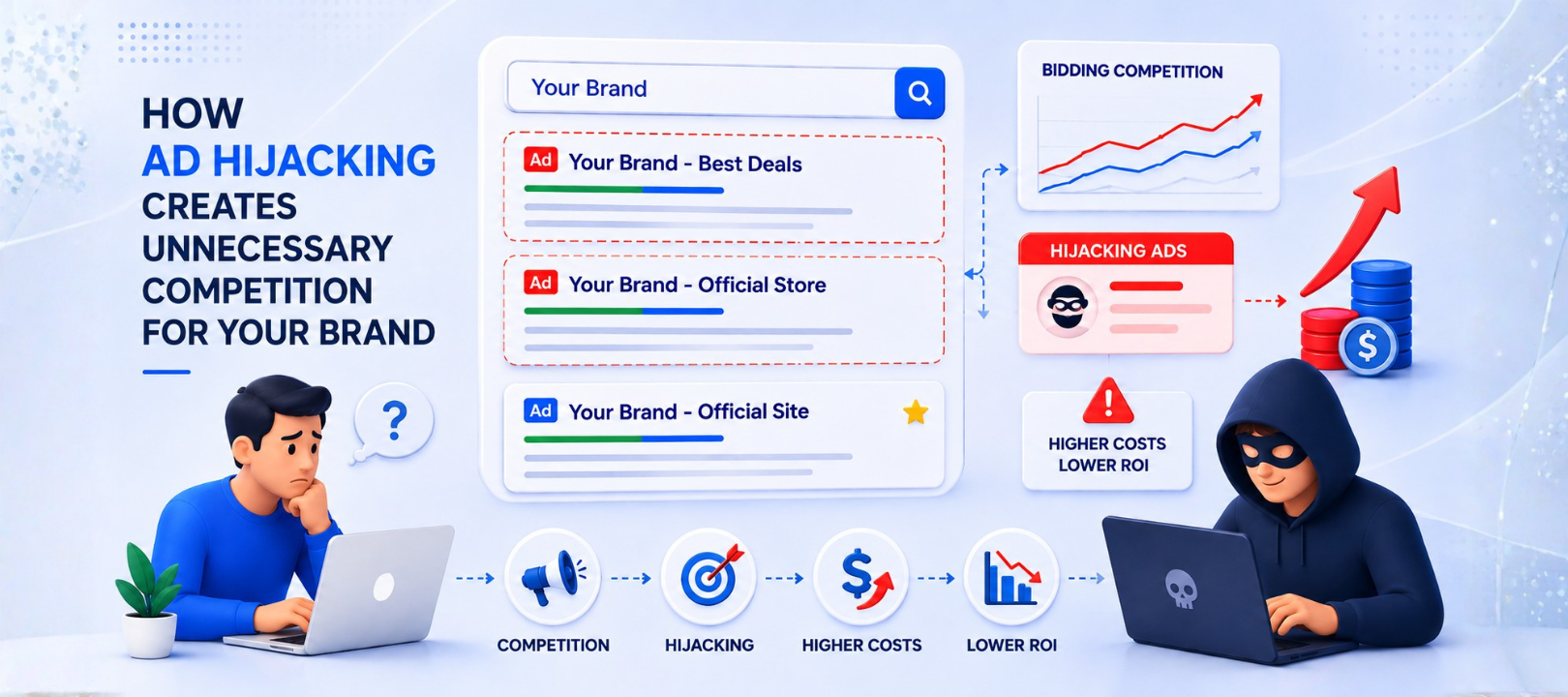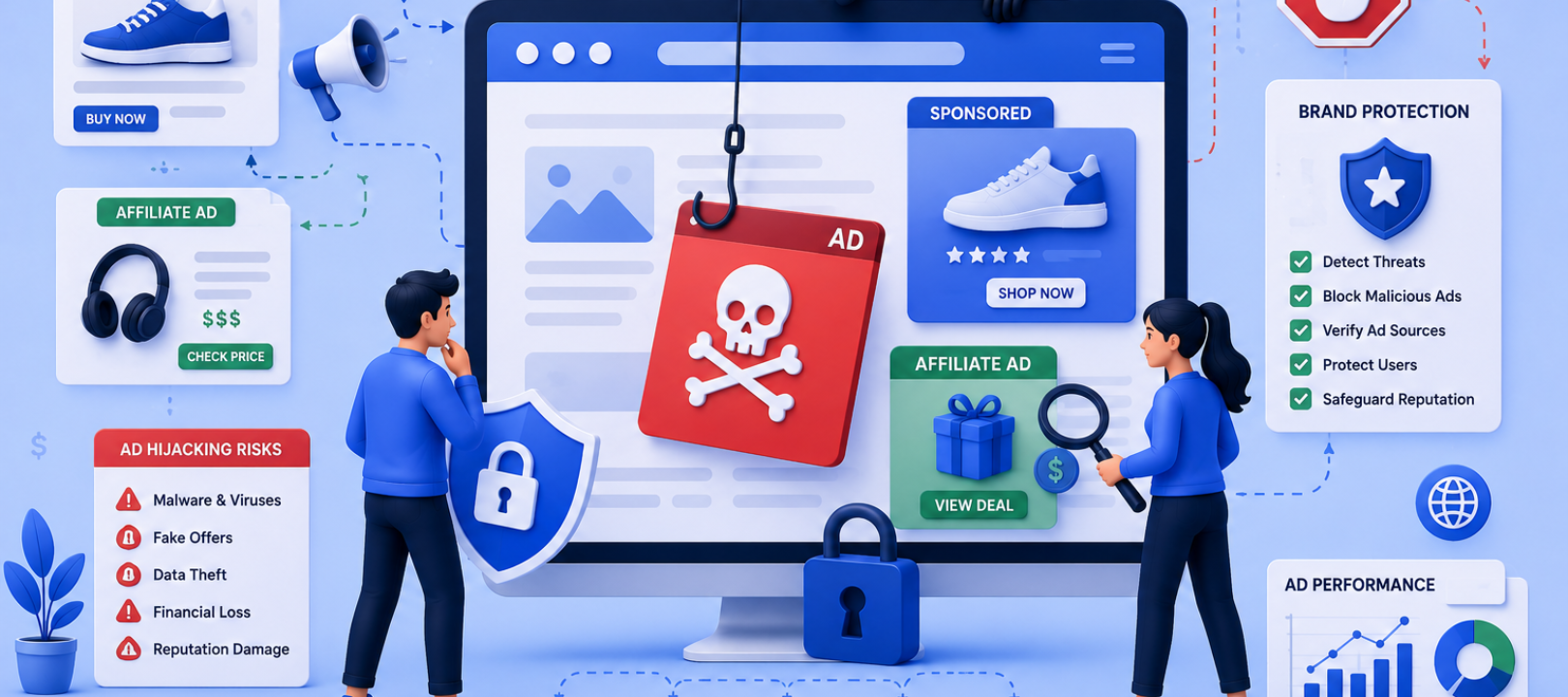
Ad hijacking fraud is one of the most common forms of affiliate marketing abuse, occurring when affiliates position themselves between a customer and a brand to claim commission on sales they did not generate.
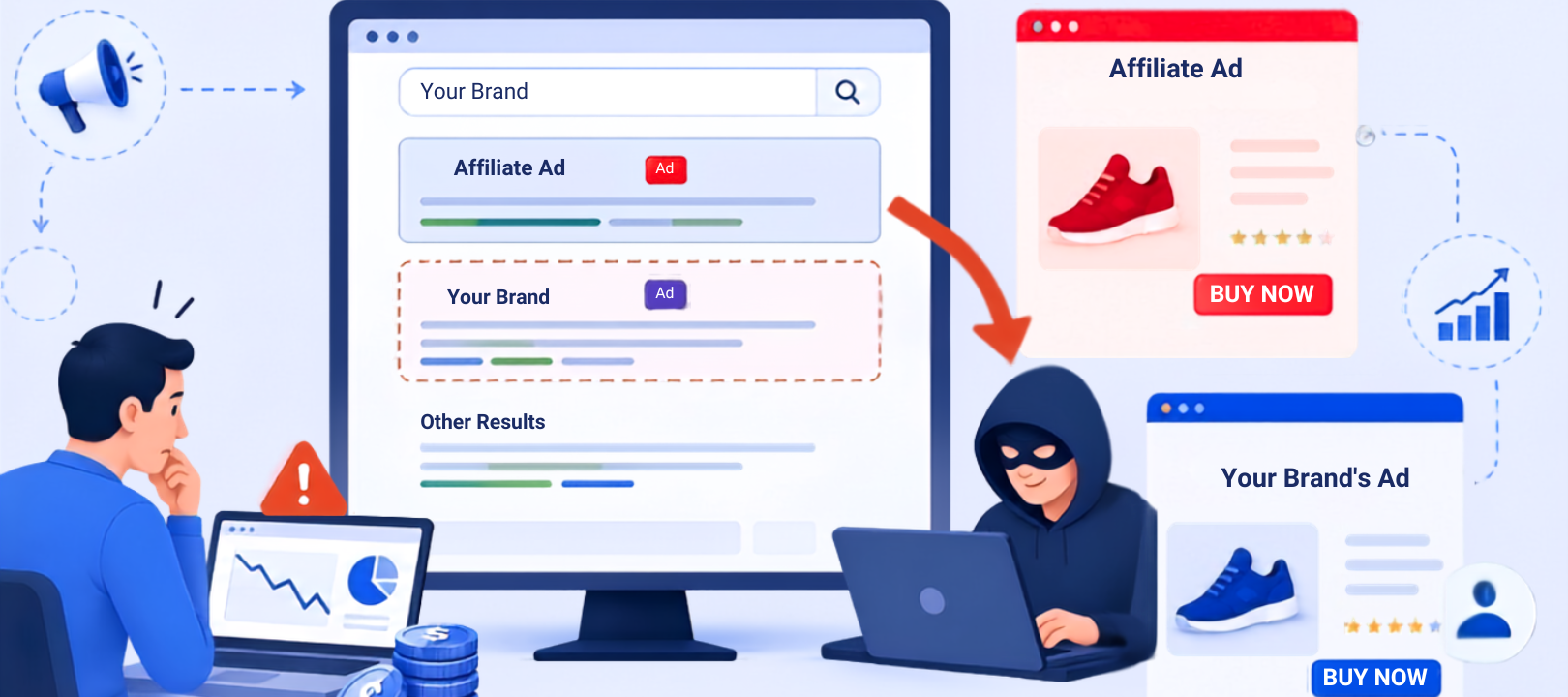
Ad hijacking in affiliate marketing happens when someone searches for a brand such as Shopsy and clicks a result that looks like it will take them directly to the official site but it actually routes through an affiliate tracking link first.
Even though the customer still reaches the brand’s website and makes a purchase, the affiliate link in between gets recorded as the source of the sale.
When ad hijacking goes unnoticed, brands can end up spending more on affiliate commissions while getting a misleading picture of what's actually driving conversions. Understanding how ad hijacking works is the first step toward protecting marketing budgets and maintaining accurate attribution.
What You Need to Know About Ad Hijacking
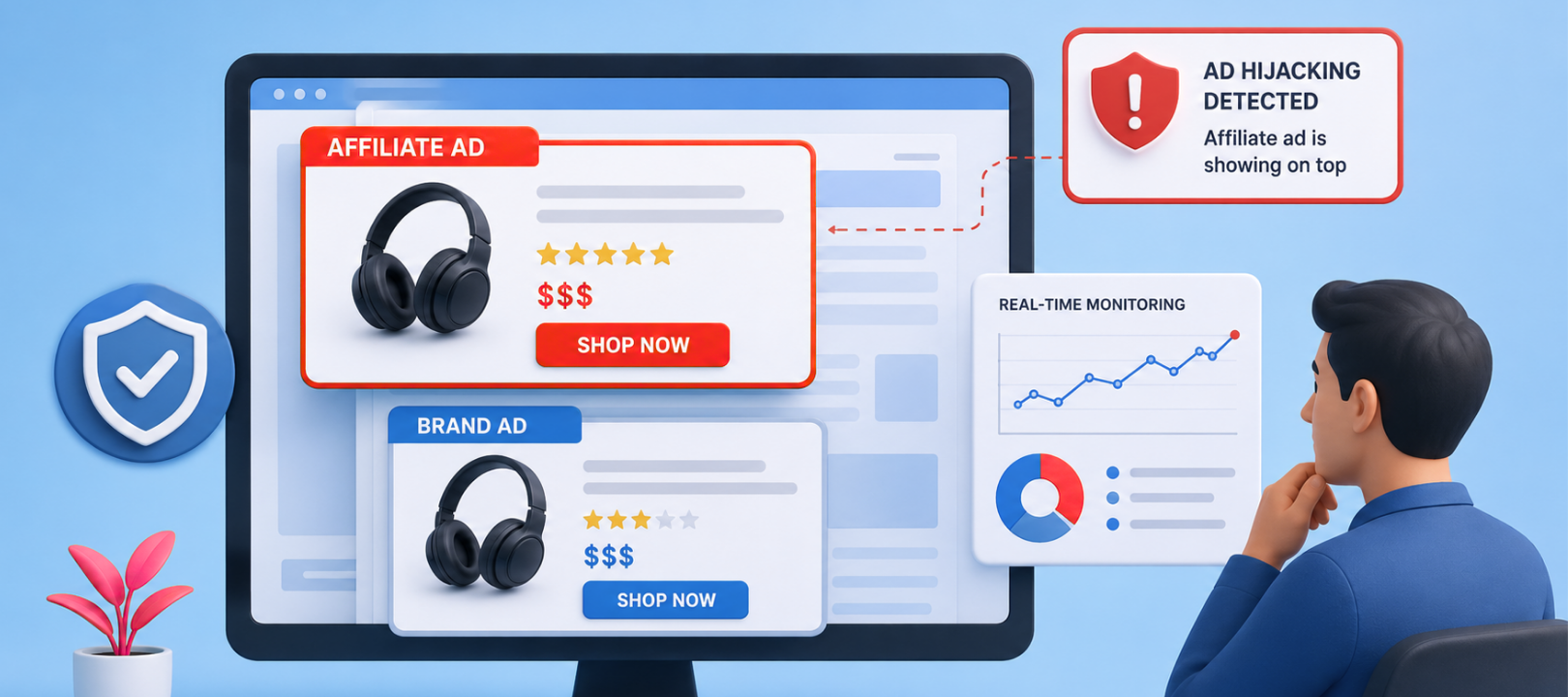
Ad hijacking is a type of affiliate marketing abuse in which affiliates intercept customers who are already searching for a brand and redirect them through affiliate tracking links before they reach the brand's website.
The customer still lands on the official website and completes their purchase as usual, but the affiliate receives commission for the sale. This often leads to brands paying extra commissions, tracking sales from the wrong sources, and not clearly understanding how their affiliate program is really performing.
How Ad Hijacking Works in Affiliate Marketing
Ad hijacking is when affiliates step into a user’s journey during a branded search, send them through tracking links, and get credited for sales the brand would have earned anyway. Here’s how it works better:
- A user searches for the brand name “Hostinger” because they already intend to buy directly from Hostinger.
- An affiliate runs a Google Ads campaign targeting the keyword “Hostinger” to capture that branded traffic.
- The user clicks the ad, thinking it is an official Hostinger result or trusted partner link.
- Before reaching Hostinger’s website, the click is routed through an affiliate tracking link with ID parameters.
- The user lands on Hostinger’s official site and purchases a hosting plan as normal.
- The affiliate gets credited for the sale, even though Hostinger generated the original intent and demand.
Identify affiliate ad hijacking, monitor branded keyword abuse, and protect your marketing budget. Request a Free Demo at PPCTrace now!
Popular Ad Hijacking Methods Brands Should Know
Ad hijacking usually happens when third parties misuse a brand’s paid search presence to divert traffic or sales. Some of the most common methods include:
- Branded Keyword Bidding: Affiliates bid on brand-targeted keywords to position their ads above official brand listings, diverting traffic that would otherwise reach the brand directly.
- Affiliate Ad Misuse: Affiliates run ads on brand terms and redirect users through tracking links without adding real value.
- Link Cloaking: Link cloaking is masking lengthy, complex affiliate URLs into clean branded links — while still tracking every click and commission.
These methods mainly impact ad campaigns by increasing acquisition costs and diverting qualified traffic away from the official brand funnel.
How Ad Hijacking Affect Brands
Ad hijacking inflates PPC costs, misattributes affiliate sales, diverts branded traffic, and reduces campaign visibility and profitability. Let’s take a look at how ad hijacking affect brands:
|
Impact |
How It Affects Your Business |
|
Higher PPC Costs |
Unauthorized bidding on branded keywords can drive up competition and increase the cost of your paid search campaigns. |
|
Brand Bidding Violations |
Affiliates may violate your program terms by bidding on branded search terms without permission. |
|
Wasted Advertising Budget |
Marketing spend is diverted toward traffic and conversions that would likely have been acquired organically or through your own campaigns. |
|
Commission Leakage |
Affiliates earn commissions for customers who were already intending to purchase directly from your brand. |
|
Inaccurate Attribution |
Ad hijacking can distort attribution data, making it difficult to identify which channels are genuinely driving conversions. |
|
Reduced Marketing Efficiency |
Poor visibility into affiliate activity can lead to ineffective budget allocation and lower overall campaign performance. |
Stop affiliates from intercepting your traffic and claiming unearned commission with PPCTrace solution for ad hijacking,.
How Brands Can Spot Ad Hijacking
Brands can spot ad hijacking by monitoring search engine results, affiliate activities, traffic sources, and conversion patterns to identify unauthorized advertisers attempting to divert traffic or claim unearned commissions. Here’s how:
-
Unauthorized Brand Keyword Bidding
Affiliates or competitors bid on your branded keywords, capturing customers who were already searching for your business.
-
Revenue Leakage
Sales that should be attributed to your marketing efforts are diverted through unauthorized ads or affiliate activities.
-
Affiliate Attribution Abuse
Affiliates claim commissions for conversions they did not genuinely influence, increasing acquisition costs.
-
Geographic Traffic Diversion
Unauthorized ads appear in specific locations, redirecting valuable traffic away from your official campaigns.
-
Loss of Branded Search Visibility
Your official ads become less prominent as third parties compete for the same branded search terms.
-
Reduced Campaign ROI
Advertising costs increase while conversion performance declines due to traffic interception and attribution manipulation.
How PPCTrace Helps Stop Ad Hijacking
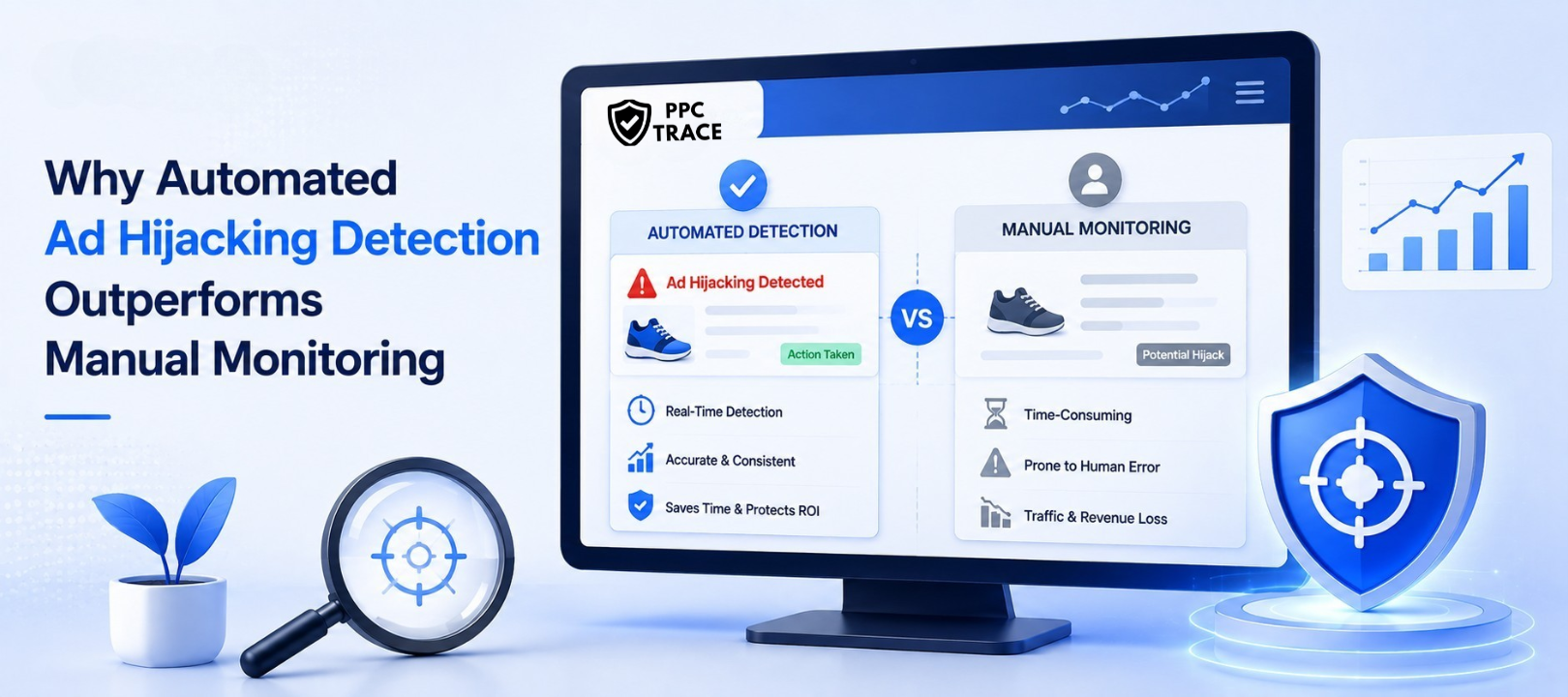
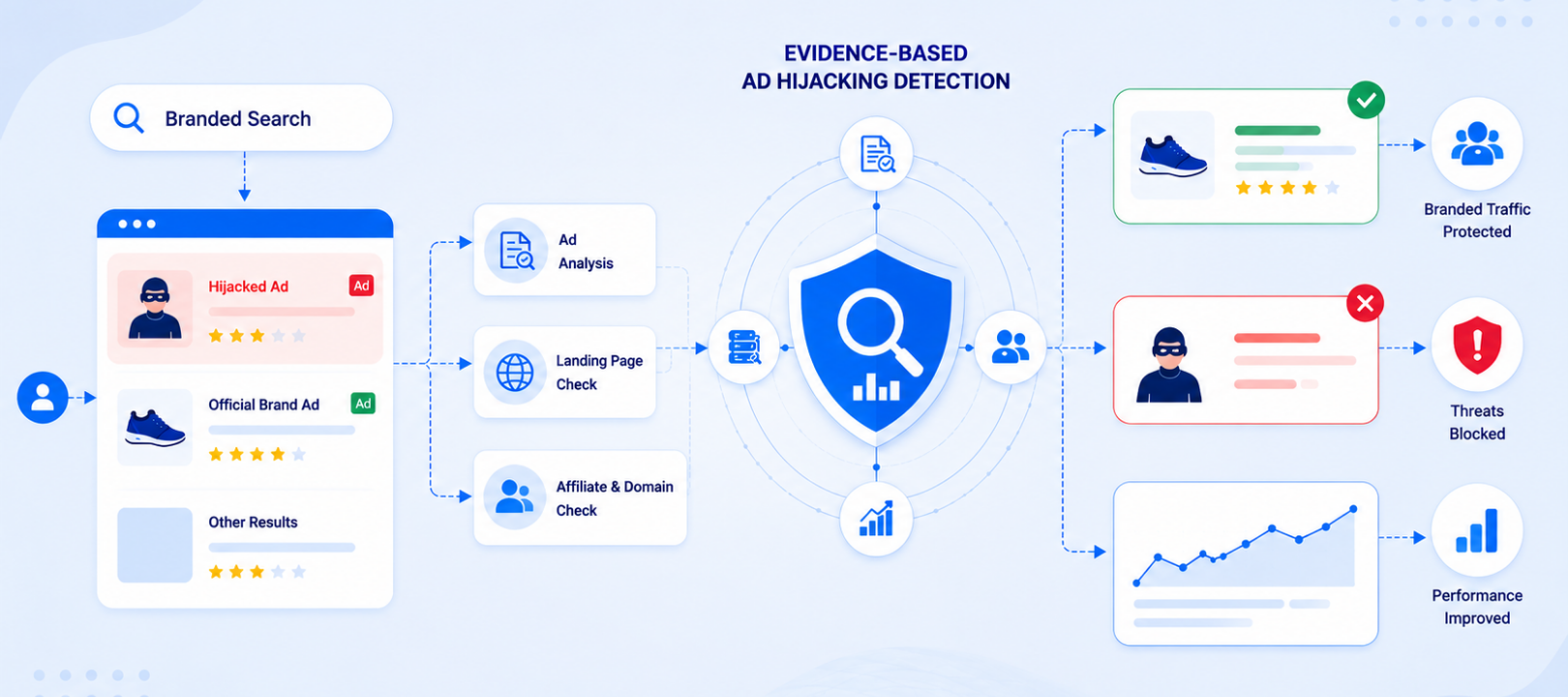
PPC Trace detects ad hijacking by continuously monitoring how and where your branded traffic is being intercepted across paid search channels.
Our Ad hijacking detection system works through multiple layers:
- Keyword Monitoring – Tracks branded and high-intent keywords to identify unauthorized bidding activity on your search terms.
- Geographic Detection – Identifies hijackers targeting your brand across specific locations, countries, and regions where your official ads are running.
- Location-Based Intelligence – Pinpoints where affiliate ads appear and where your official campaigns are active, helping isolate suspicious overlaps.
- Search Engine Tracking – Monitors Google, Bing, Yahoo, and other platforms to detect duplicate or competing ads targeting your brand.
- Traffic Pattern Analysis – Flags abnormal spikes in clicks or conversions that indicate affiliate interception or brand bidding abuse.
By combining keyword, geographic, and location-based detection, PPC Trace gives brands complete visibility into who is bidding on their traffic and where revenue leakage is happening. Book your free demo at PPC Trace today.
Conclusion
Ad hijacking can quietly drain marketing budgets, inflate affiliate commissions, and distort attribution data without brands realizing it. By understanding how hijacking works and monitoring branded keywords, affiliate activity, and geographic traffic patterns, businesses can identify revenue leakage before it impacts performance. Ready to protect your brand traffic? Book a PPCTrace demo today and try the free trial to see exactly where revenue leakage may be happening.