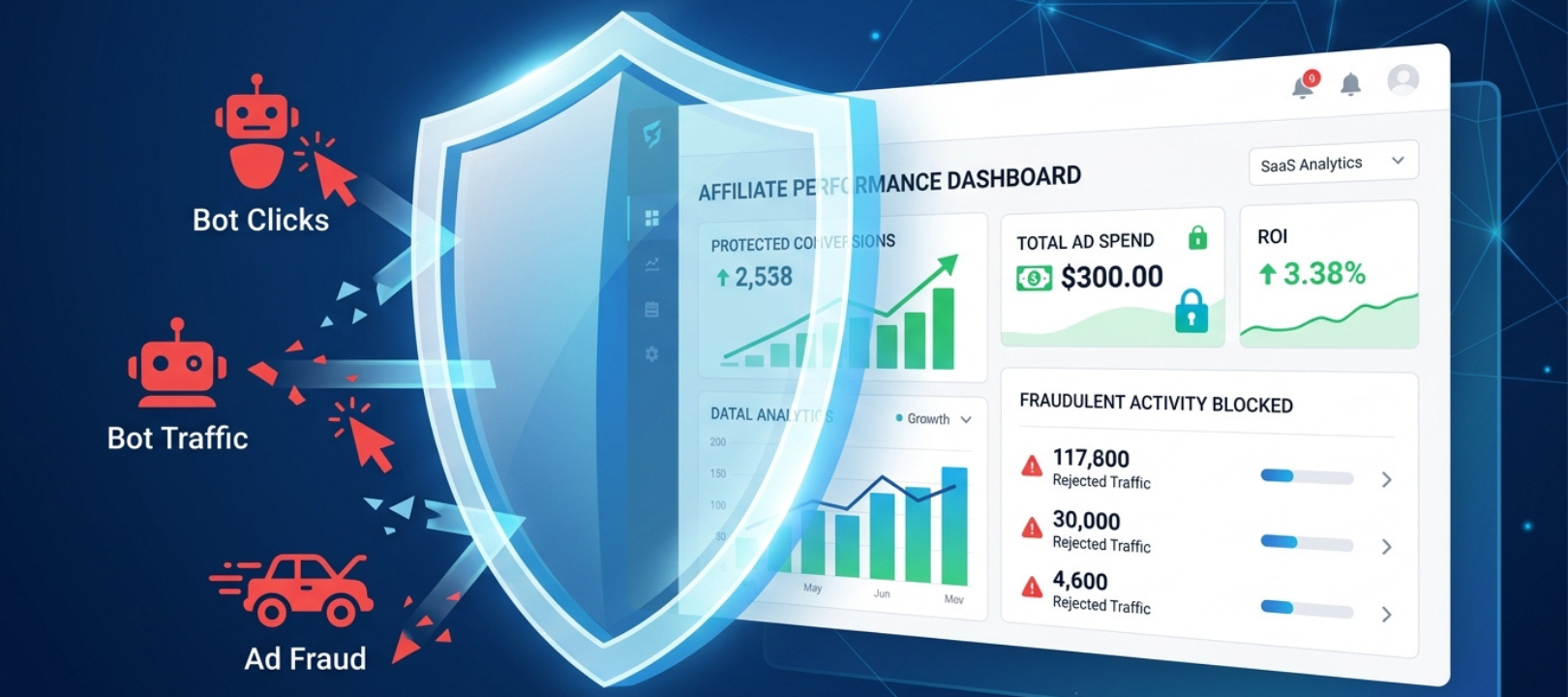
Affiliate marketing delivers results — but only when the commissions you pay reflect genuine conversions. When fraudsters infiltrate affiliate programmes, they intercept traffic, manipulate attribution, and collect commissions for sales they had no part in generating.
The damage is often invisible until it's significant. This guide by PPCTrace provides you the six signs your affiliate programme may already be compromised — and what to do about it. It also helps you detect affiliate fraud at the early stage, protecting your marketing advertisement budget, and ensuring fair affiliate attribution across your brand network.
Quick Answer: Affiliate programs are usually often hijacked through the medium of fake clicks and coupon misuse by reducing the impact of fraud detection to protect earned commissions and data performance.
What is Affiliate Program Hijacking?
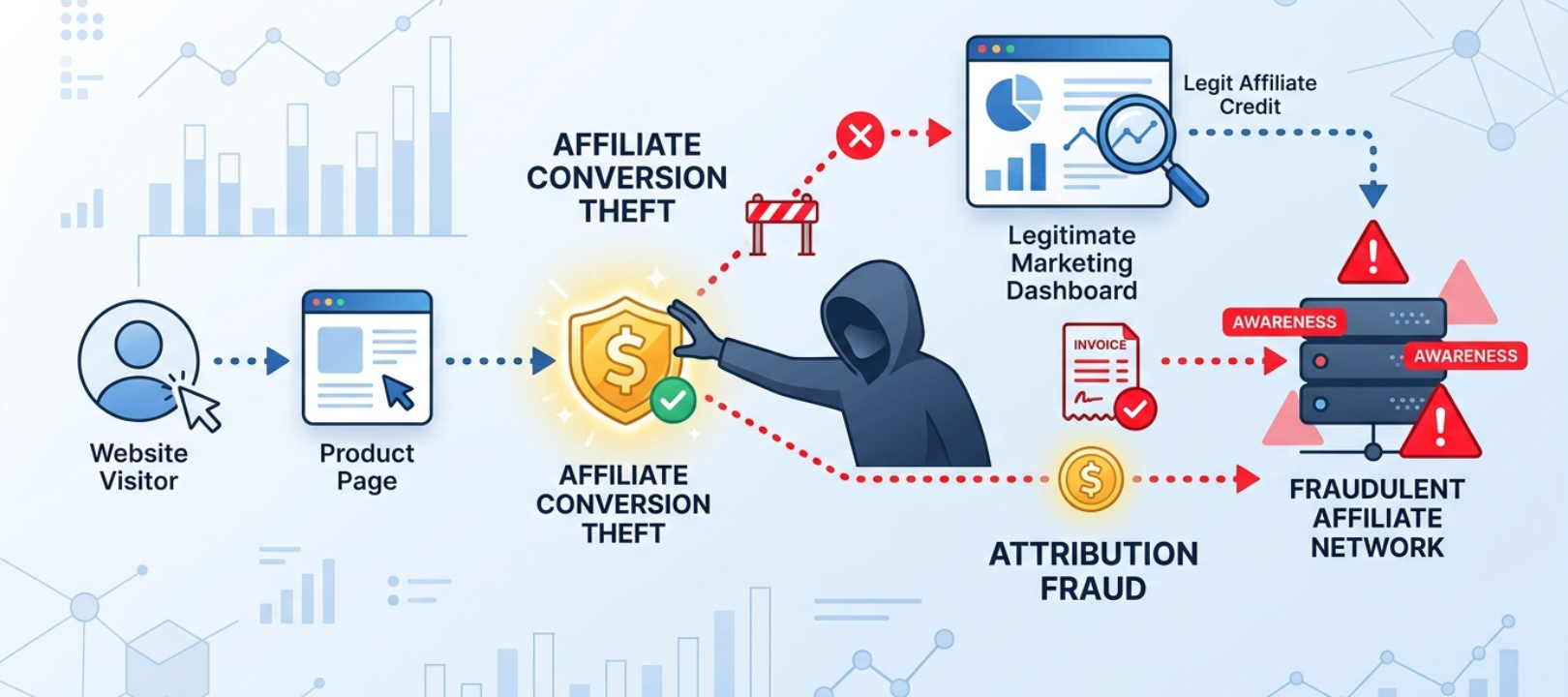
Affiliate program hijacking occurs when bad actors exploit loopholes in affiliate tracking systems to claim unearned commissions. They do not generate new customers. They intercept existing traffic — users already searching for your brand, already ready to buy — and insert themselves into the conversion path at the last moment.
The result: inflated CPCs, corrupted attribution data, commissions paid on traffic you already owned, and margins quietly eroding month after month.
For example:
- A customer searches for a popular brand name on Google and clicks an unauthorized affiliate advertisement instead of the official website ad.
- The affiliate intercepts the fake traffic and receives profits for the purchase through affiliate tracking manipulation system.
- The commission is unearned even without influencing the buying decision.
- This increases the actual advertising costs and reduces profit margins.
- It also creates inaccurate advertisement attribution data affecting brands performance tracking data..
Why Affiliate Fraud is Increasing Rapidly
Affiliate marketing fraud is becoming more challenging as affiliates continue searching new ways to deceive affiliate tracking systems and take real commissions. Many brands still face problems to combat these illicit activities because of not using proper affiliate fraud detection system. It allows bad actors to exploit weakness in tracking activities that go unnoticed for long time periods.
6 Ways Your Affiliate Programme Is Being Hijacked
1. Ad Hijacking - Affiliates Appearing Above Your Own Listings
Ad hijacking happens when affiliates target your branded keywords in paid search, placing their ads above your official listing to intercept traffic that was already coming to you.
What to watch for:
- Unknown ads appearing when you search your own brand name
- Your branded CPC rising without a clear competitive explanation
- Affiliate commissions increasing while net-new customer numbers stay flat
- Attribution showing affiliate-last-click on customers who searched your brand directly
2. Unauthorized Brand Bidding Is Rising
Brand bidding is a closely related tactic where affiliates secretly bid on your trademarked keywords in Google or Bing Ads. When a user searches for your brand, the affiliate's ad appears, the user clicks through an affiliate link, and the affiliate earns commission — for a customer you already had.
What to watch for:
- Unknown display URLs in branded search results.
- Auction Insights showing unfamiliar competitors with high overlap rates.
- Rising branded CPCs with no corresponding increase in new audiences.
- Commission payouts growing while ROAS on brand campaigns declines.
3. Coupon and Voucher Abuse Is Increasing
Coupon and voucher abuse is a different type of affiliate fraud where legitimate third-parties misuse or expose discount codes to claim fake commissions and reduce the brand’s overall profit margins.
How Coupon and Voucher Abuse Happens:
- Fraudsters expose influencer or exclusive discount codes on third-party coupon sites and forums.
- Codes are shared widely across social media channels such as Instagram, TikTok, and cashback platforms.
- Customers use these manipulative codes during checkout or making a purchase.
- Affiliates intercept the main sources of sale and claim last-click commission.
- Multiple affiliates may take credit for the same promotion.
- This creates misleading data attribution and inflated affiliate performance.
- Brands lose marginal profit due to repeated or unnecessary commission payouts.
4. Trademark Infringement - Hardest to Detect
Trademark infringement in affiliate marketing happens when affiliates use your brand name or logo to create fake or lookalike landing pages, misleading users and redirecting traffic through fraudulent affiliate links.
What to watch for:
- Lookalike domains or landing pages appearing in branded search results.
- User complaints about reaching unexpected pages when searching for your brand.
- Affiliate traffic arriving from URLs that do not match your approved partner list.
- Fraud going undetected for months due to geo-targeting or device-level evasion.
5. Browser Extension Abuse Is Growing
Browser extension fraud is a growing and underdetected form of affiliate link hijacking. Malicious extensions — often disguised as coupon finders or shopping tools — run silently during a user's checkout session and overwrite the legitimate affiliate cookie with the fraudster's tracking ID at the moment of purchase.
What to watch for:
- Legitimate affiliates reporting a drop in attributed conversions.
- An affiliate generating high conversion volume with low or zero engagement signals.
- Commission being paid to an affiliate whose traffic source cannot be identified.
- Attribution data showing last-click overrides with no visible ad or referral source.
6. Click Injection Fraud Is Becoming More Advanced
Click injection is a technique where website cookies are manipulated without real user intent. Fraudsters trigger hidden clicks or scripts that overwrite attribution just before a purchase, making it falsely appear that the affiliate stole the conversion.
What to watch for:
- Very short click-to-conversion time (often just a few seconds).
- Sudden spikes in conversions from a single affiliate or suspicious source.
- High conversions with very low engagement or session activity.
- Repeated sales from unclear or low-quality traffic sources.
- Multiple hidden events fired before checkout, indicating cookie stuffing activity.
How to Detect If Your Affiliate Program is Being Hijacked
Early affiliate fraud detection can prevent significant financial losses. Businesses should continuously monitor traffic sources, conversion patterns, and affiliate behavior. Here’s how:
|
Monitoring Areas |
Key Insights |
|
Traffic Sources |
Up to 20–40% traffic can be invalid in poorly monitored affiliate programs |
|
Conversion Patterns |
Fraud can inflate conversions by around 30% |
|
Affiliate Behavior |
Around 1 in 5 affiliates may show risky or suspicious activity patterns |
|
Click Activity |
Click fraud affects 10–15% of global digital ad clicks |
|
Attribution Data |
Can cause 10–25% revenue misattribution |
|
Regular Audits |
Monthly audits can reduce fraud losses by up to 50% |
|
Fraud Detection Tools |
Fraud detection software can detect 90%+ fraudulent activity in real time |
Many brands now rely on affiliate fraud detection software to automate monitoring and reduce manual review efforts.
If you’re looking for a complete solution to tackle affiliate fraud and protect your revenue from hijacking, it’s time to take action. Request a demo at PPCtrace and see how real-time detection can secure your affiliate program.
Best Practices for Affiliate Fraud Prevention
The best practices generally include :
- Monitoring traffic and conversions regularly.
- Conducting routine affiliate audits.
- Using fraud detection tools.
- Tracking suspicious click activity.
- Ensuring accurate attribution to prevent commission abuse and hijacking.
Conclusion
Affiliate programme hijacking does not announce itself. It grows quietly — inflating costs, corrupting data, and eroding margins while standard reporting shows nothing unusual.
The six tactics above — ad hijacking, brand bidding, coupon abuse, trademark infringement, browser extension fraud, and click injection — are the most active threats to affiliate programmes in 2026. Knowing the warning signs is the first step. Continuous, automated monitoring is what actually stops them.
By choosing proper affiliate fraud detection tools, regular monitoring, and strong prevention strategies, businesses can reduce risk and protect revenue. Request a demo at PPCtrace to secure your affiliate program.